
Scaling Sustainability: The 2026 Shift in Moroccan Export Standards
As the 2026 summer season peaks, Moroccan producers are moving beyond basic compliance toward advanced water stewardship and rigorous social audits to meet the demands of Northern European retail chains.
Market note
An analysis of Morocco's evolving compliance landscape, focusing on GlobalG.A.P., SMETA audits, and critical water stewardship for NW European buyers.
As of July 2026, the landscape for Moroccan produce entering the Netherlands, Germany, Belgium, and the Nordics has shifted from voluntary sustainability to mandatory data-driven compliance. Wholesale buyers are no longer just looking at Brix levels or logistical efficiency; the focus has intensified on the 'Green Morocco' initiative’s latest benchmarks for resource management and ethical labor practices.
Water Stewardship and the IFA v6 Standard
In the Souss-Massa and Guelmim-Oued Noun regions, where 85% of Morocco's early-season greenhouse vegetables originate, the adoption of GlobalG.A.P. IFA v6 has become the baseline. This week, we are observing a 15% increase in producers integrating the SPRING (Sustainable Program for Irrigation and Groundwater Use) add-on. This is critical for Nadorcott mandarins and specialty tomatoes, ensuring that every cubic meter of water is monitored via satellite-linked drip systems.
“Certification is no longer a badge; it is the entry ticket to the high-end retail shelves of Northern Europe.”
The Rise of SMETA and Social Accountability
While GRASP (GlobalG.A.P. Risk Assessment on Social Practice) remains the standard for medium-sized growers, our larger supply partners in Agadir and Larache have fully integrated SMETA 4-pillar audits. This ensures transparency in worker housing, fair wages, and health and safety protocols—metrics that are now non-negotiable for our German and Nordic supermarket clients who operate under strict supply chain due diligence laws.
- GlobalG.A.P. IFA v6: Mandatory for all stone fruit and citrus exports.
- GRASP V2: Required for 100% of our vegetable growers in the Souss-Massa region.
- SMETA 6.1: The preferred social audit for major retail contracts in the Benelux region.
- Water Desalination: 40% of our current summer produce utilizes desalinated water from the Agadir plant.
Packaging and Waste Reduction Benchmarks
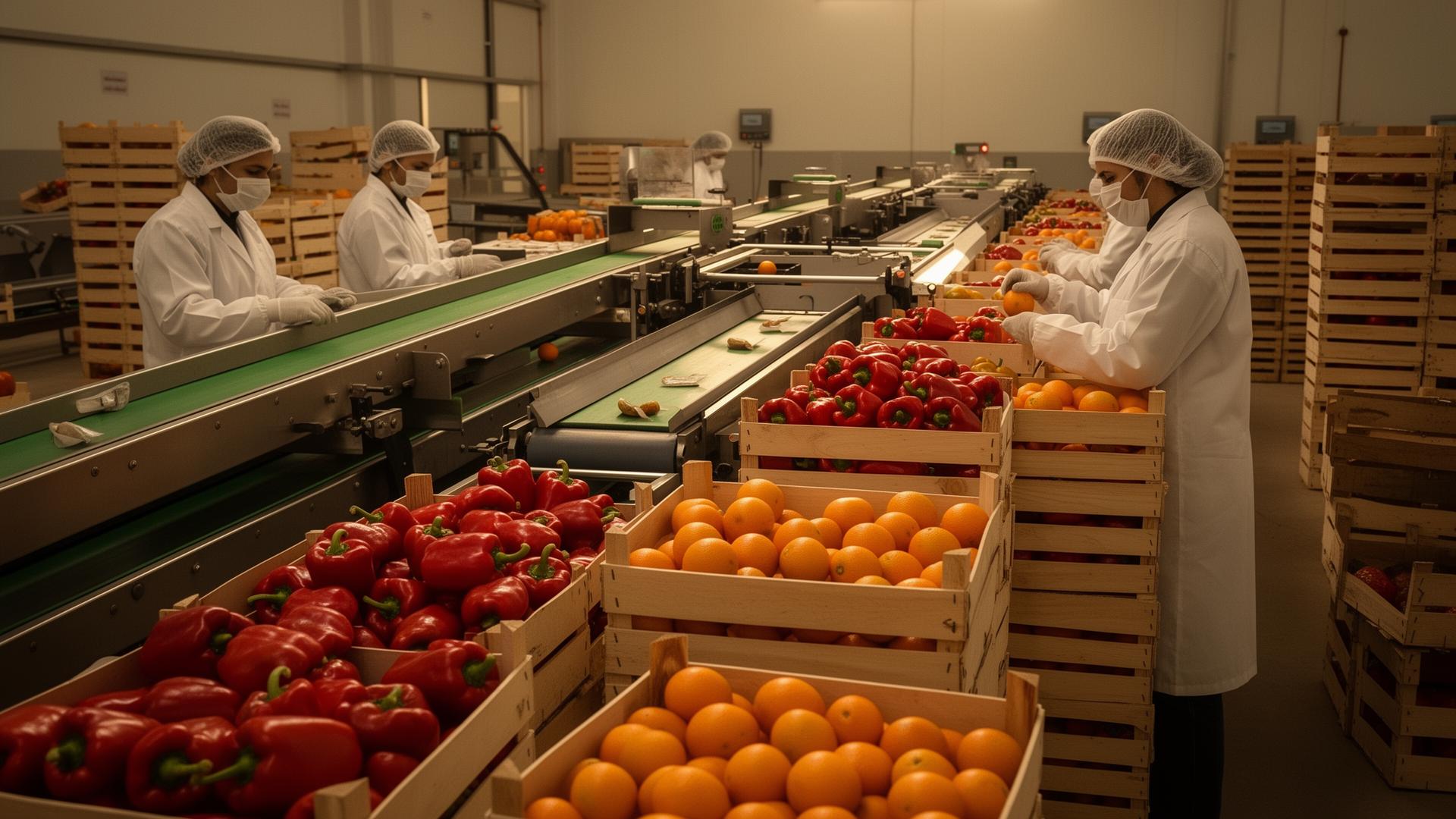
Sustainability extends to the packhouse. This week's data shows that 65% of Moroccan bell peppers destined for Rotterdam and Hamburg are now packed in recycled R-PET or compostable fiber trays. Reducing plastic weight by even 3 grams per unit has allowed our partners to decrease their carbon footprint per pallet by approximately 4.2% compared to last season.
For wholesale buyers, these certifications represent risk mitigation. By sourcing produce that meets both ecological and social benchmarks, Crown Fields B.V. ensures that our partners in Northern Europe remain compliant with evolving EU environmental regulations while maintaining a consistent supply of premium-grade Moroccan produce throughout the summer heat.